
City leaders show support for new proposal addressing homelessness
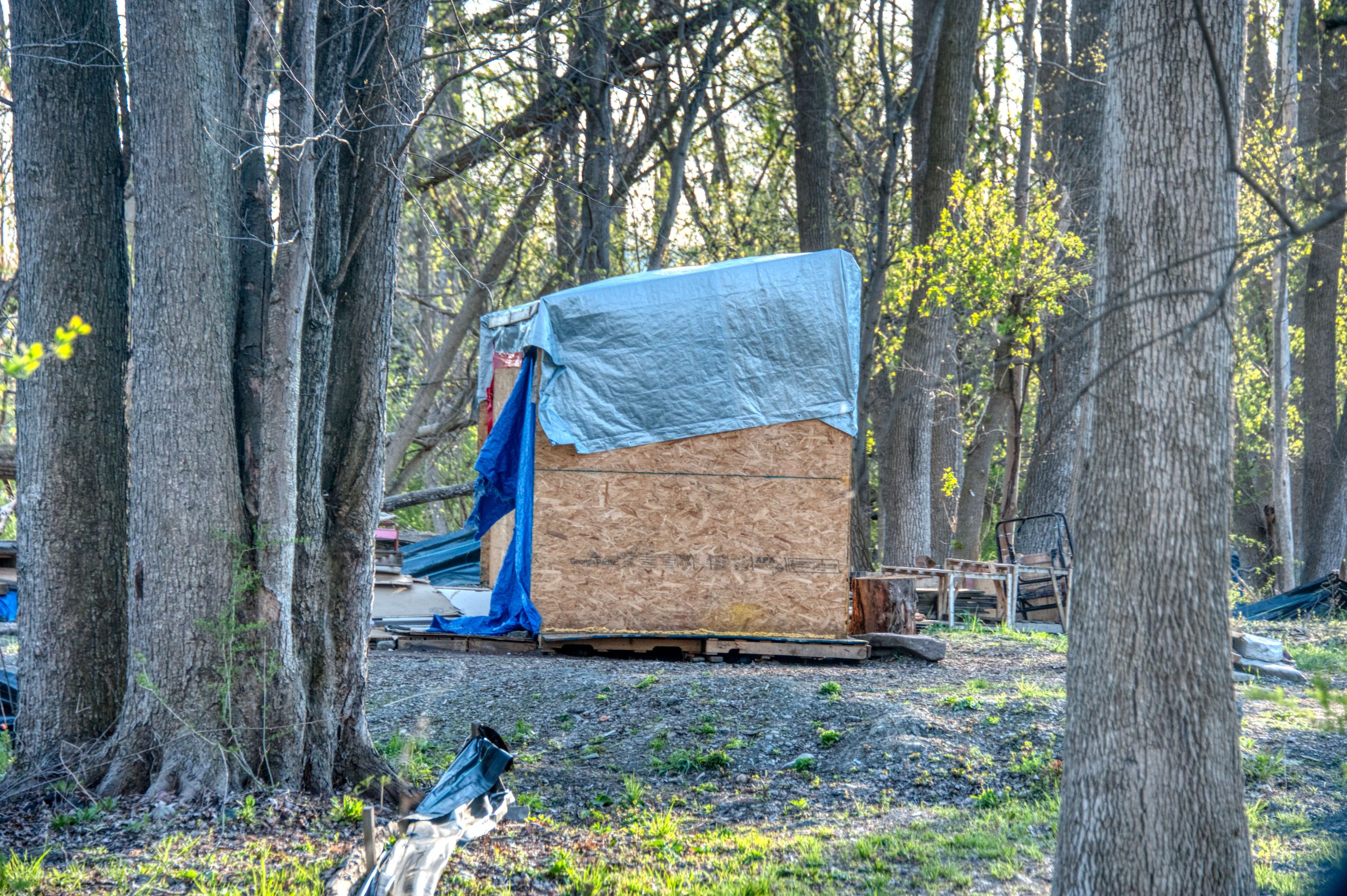
On April 20, a group of local stakeholders presented their concept and requested city support for the creation of “an approximately 4-acre sanctioned encampment site on city property” that would address the need for more resources for the homeless within the city, according to the stakeholders’ report (available at tinyurl.com/y4gy8ykc, page 3).
The Ithaca Dedicated Encampment Site (TIDES), as it’s been dubbed, stands to have a large impact on the city’s homeless population, so we spoke with local leaders to see how we got here and what’s next.
TIDES overview
TIDES would be located in Ithaca’s Southwest Park site behind Wal-Mart, an area colloquially known as “The Jungle.” It would serve as a “sanctioned campsite meant to provide a safe, healthy, secure and 24/7 staffed environment that serves — with dignity — up to 50 individuals at a time who are experiencing temporary homelessness,” according to the report.
As described in the report, TIDES would include 25 individual camping cabins, 24/7 on-site management and support by homelessness professionals, and central facilities with toilets, showers, kitchen, locked storage and gathering spaces. In addition, there would be coordination with service providers centered around case management, housing, health care, recovery, work readiness and government service access. There would also be a low barrier to entry and very few requirements for residents to follow to be able to stay there.
As group members explained, the history of this concept locally goes back to January of this year, when Ithaca Urban Renewal Agency Director Nels Bohn suggested that the city could use the land currently being used for homeless encampments for new housing for those homeless individuals. In response to this call to action, a group of volunteers came together, intent on drafting a proposal to present to Common Council.
The volunteer group includes a variety of local stakeholders, including city alderpersons Cynthia Brock and George McGonigal, Chris Teitelbaum of St. John’s Community Services, Carmen Guidi of Second Wind, County Legislator Rich John, developer Jerry Dietz and others.
The need
As group members explained, issues surrounding homelessness — as well as talks to address them — are nothing new, but the need has become even more apparent in recent years.
“Homelessness has been with us for many, many years. This isn’t a problem that has obviously just cropped up,” Dietz said. “But that said, what we have seen in the last year or so is the encampments — the homelessness — has become much more out in the open, whereas in years past, it was hidden away, out of sight. … It has become a problem that people are much more aware of.”
Brock explained that this change can be attributed to several factors, especially the fact that “much of the area that people had been using for encampments in the Southwest Park area has been closed” to instead be used as a dewatering site for dredging.
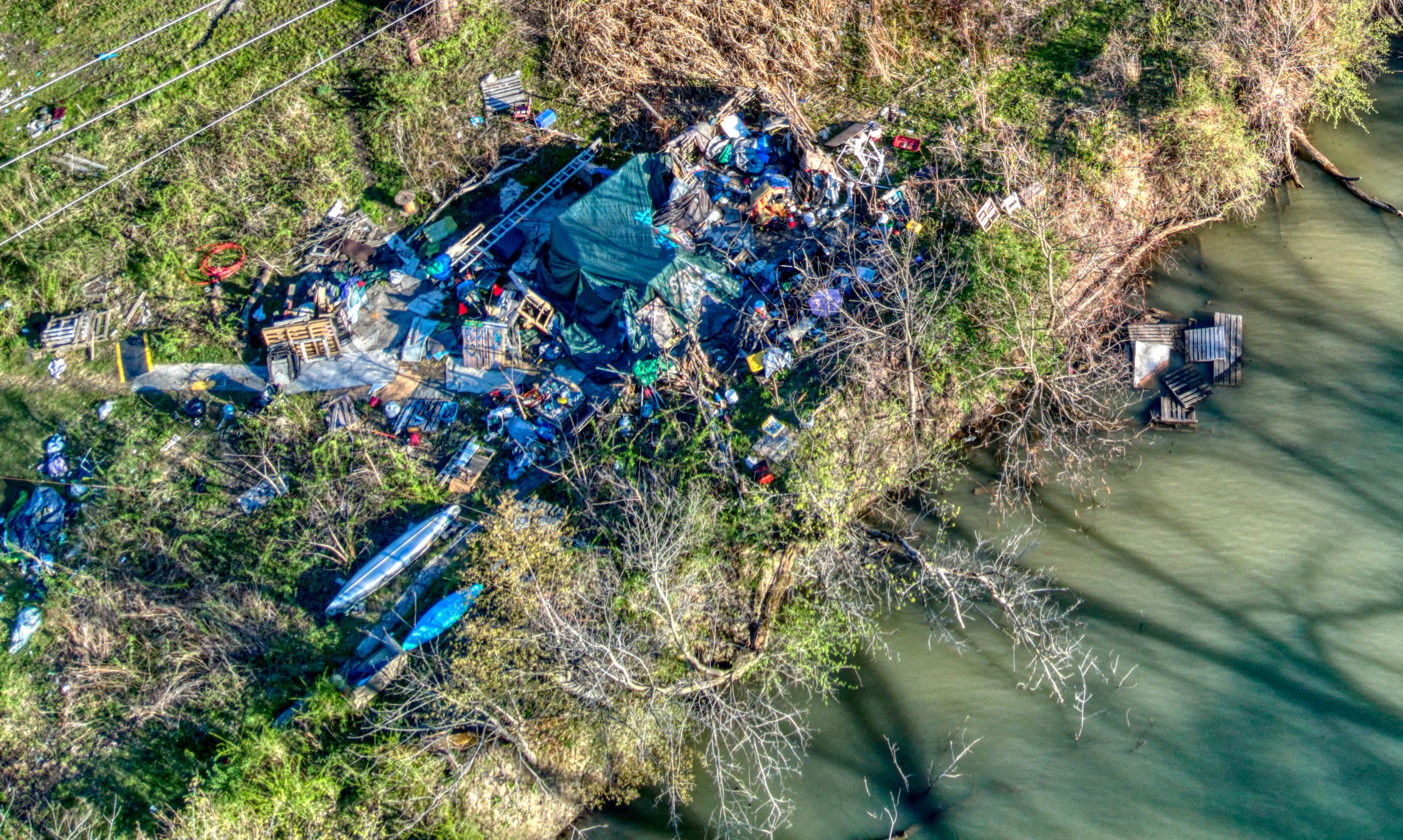
“A significant portion of that site is also being used by the DPW, the Department of Public Works, for storage of construction detritus associated with all of our roadwork that we’re doing in the city,” she said. “So, those spoils are also being placed on the Southwest Park site. So, many individuals who used to set up their encampments, they are now out and having to find other locations.”
Brock added that there is a safety component in being visible, so vulnerable individuals feel safer camping more out in the open than tucked away.
Teitelbaum, regional director of St. John’s, explained how many individuals find themselves with little option other than camping out in the open despite there being many resources in the county for the homeless — including St. John’s itself as a shelter.
“Not that there isn’t any, but there’s not enough supportive housing,” he said. “There’s not enough sober housing. There’s not enough housing for victims of domestic violence who need to get away from a situation but may not have the resources to just go and get a new apartment. So, I think in general, there’s a lot of really strong, really powerful agencies keeping the boat up. But there is, like many things in this country, a massive infrastructure deficit of just buildings — buildings to put people in.”
Others brought up the fact that, given other options, camping can be a lot less restrictive in terms of what’s required of residents.
“Most people who are homeless really want some sort of living arrangement in a house or an apartment, something permanent,” John said. “But for a lot of the people who are camping, they don’t want to go into housing; they don’t want to go into shelter. They would prefer to live in the conditions they’re living in now because there’s essentially no restrictions on their behaviors. And they can do what they want, and any time you go into a shelter or some sort of permanent housing, there’s a lot of structure and rules and limitations.”
TIDES creation and reaction
Guidi, founder of the nonprofit Second Wind, said that while he’s seen a lot of task forces and proposals addressing homelessness come and go, TIDES is the first proposal he’s really excited about.
“I’ve been asked this 13, 14 years now,” he said. “I have sat around table after table after table. I’ve been in task force after task force after task force with Mayor Svante, with the police chief, with the fire chief, all of them. They asked me to be on these task force[s], and they all dead end. They have all come to a dead end. … And finally, Cynthia Brock and George McGonigal said, ‘Hey, can we walk through The Jungle with you?’ And that’s all it took.”
Guidi said that, by the end of that trip, “their eyes were opened,” and Brock specifically asked if they could have further conversation about what they could do to help. Those conversations eventually led to the creation of TIDES, which Guidi called “the closest we’ve ever been” to “having something good to come out of these conversations.”
“I’ve never been part of a group that has been so motivated and so bound and determined to do something, to have a change,” he said. “The status quo is just not acceptable anymore. And I’ve never been a part of a group like that. The people on this working group are just phenomenal.”
Across the board, sources interviewed for this story reported that the reaction to TIDES so far has been “universally positive,” as several put it.
“It’s been pretty positive,” Teitelbaum said. “Of course, we live in an incredibly diverse community, and people have different ideas about how things should be done. And we have, I think, very nicely found space within the proposal to address the concerns folks have had. … But so far, the reaction has been much more positive than I think I expected it to be. I was a little worried to begin with, but it’s been much more positive.”
Looking ahead
Now that the presentation to the city is over, the next step is a presentation to county administration later this month. After that, the volunteers will hammer out the logistics of the concept and craft an official proposal to bring before Common Council.
Sources interviewed said they have high hopes for TIDES to be seen all the way through and don’t expect significant challenges related to getting enough people involved or being able to pay for it.
“There are monies out there,” Teitelbaum said. “[It’s] the will to do it. And I think once people see something, saying, ‘Oh, this looks great. I think this could work,’ then the will generates itself. And people want to get in on that thing. I think it’s our job to sell it. I think it’s our job to sell it in a way that makes sense to people in an honest and truthful way. And I think it’s entirely, absolutely feasible.”
Dietz pointed out that, looking at the issue from a macro level, TIDES could be a much cheaper approach than the current status quo.
“There’s also cost to not doing it,” he said. “There’s lots of activity that costs the city, stuff that they have to address all the time. The city has a cost if they have to go put out a fire. … There is a cost that the city has already [had]. Whether that balances out? I don’t know. But that’s a long answer to the short answer, which is, yes, I do believe this has got the ability to happen right now because of the way things are in our community.”
Brock and others clarified that TIDES is by no means a solution to homelessness, but it is something that stands to help many Ithacans.
“The solution for homelessness is permanent housing,” Brock said. “What we’re hoping to do through TIDES is meet people where they’re at, provide them stability, provide them access to services, help them get their feet under them so that they can be best prepared to be moved into stable and supportive housing. But this is not a solution in any way. This is not ‘Let’s do this, and then we’re done.’ We need to continue to expand options for supportive housing, expand that inventory, expand affordable housing inventory.”
John added that fully implementing TIDES will require cooperation from numerous individuals and groups both at the city and county levels.
“This will not work without city and county working together,” he said. “And the county is already spending a lot of money trying to provide supportive services, through probation, through social services, through the Health Department and all the not-for-profits that the county helps fund. … Even if you don’t live in the city and don’t see this on a daily basis, you should care about it because it has impacts that go well beyond the immediate location of the camps.”
For more information about TIDES, visit the previously listed link. Learn more about Second Wind at secondwindcottages.org and about St. John’s at sjcs.org.
Jessica Wickham is the managing editor of Tompkins Weekly. Send story ideas to them at editorial@VizellaMedia.com.
Related Articles
Cayuga Medical Center nurses to rally, alleging anti-union tactics by hospital management
CMC nurses plan a rally, alleging unsafe staffing and illegal anti-union tactics as the hospital highlights recent patient-safety gains.

Holiday traditions bring community cheer
Tompkins County holiday traditions light up homes, farms, and schools with festive cheer and community spirit.

Design details unveiled for new Center of Government
Design details for the Tompkins County government building in downtown Ithaca are now public, with a county survey open for feedback.