
County, city work to fulfill green energy promises
Last November, Tompkins Weekly provided an in-depth update on green energy efforts being taken on by the city of Ithaca and Tompkins County (tinyurl.com/ycvgcn3d). In the five months since, even more strides have been made, but, as local activists can attest, there’s still much work to be done. So, we’re diving back into green energy to discuss the latest developments.
Local activists rally for change
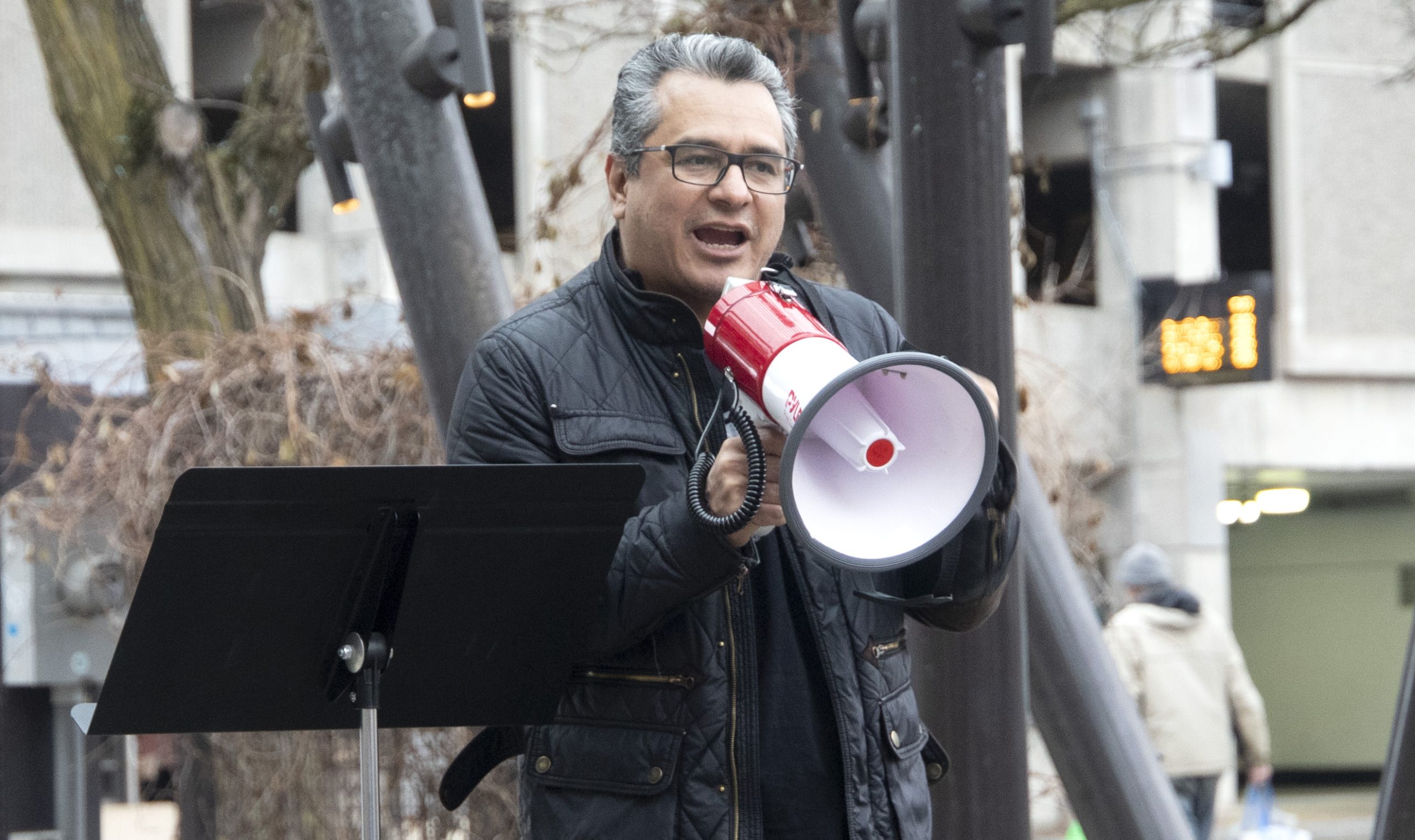
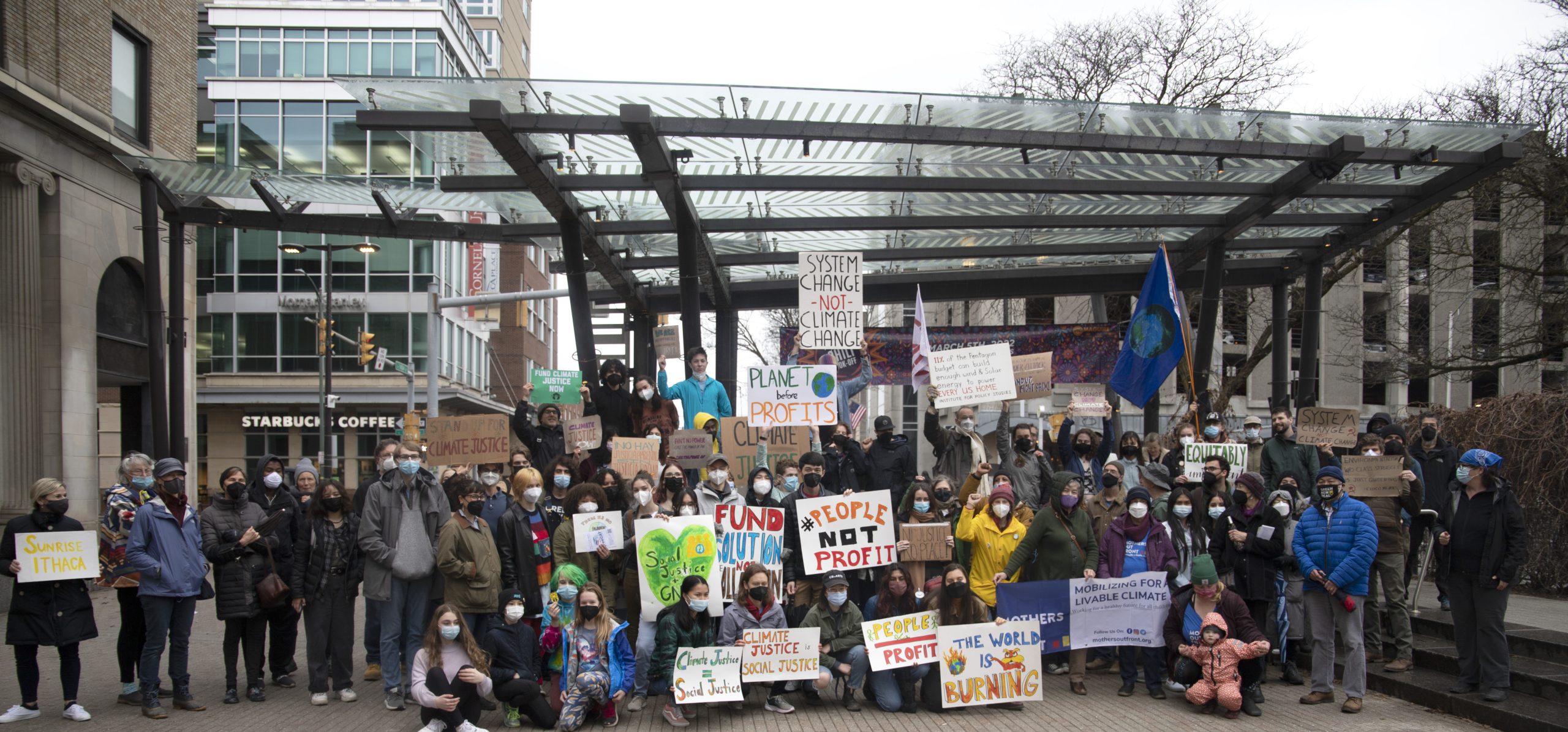
The most recent news regarding the Ithaca Green New Deal came just last Friday, when local climate activists rallied on the Ithaca Commons to “urge the equitable implementation” of the Green New Deal, according to a recent release.
Spectators and speakers urged city government, especially the Common Council, to follow through on the social justice aspect of the Green New Deal, which commits to sharing the deal’s benefits “among all local communities to reduce historical, social and economic inequities.”
The rally was hosted by Sunrise Ithaca, an activist group run primarily by high school and college students. Speakers included leaders from Ithaca High School, the Ithaca Democratic Socialists of America, Ultimate Reentry Opportunity and the Learning Farm as well as Jorge Defendini, city alderperson on the Common Council, and Luis Aguirre-Torres, Ithaca’s director of sustainability.
The local rally happened concurrently with hundreds of other rallies around the world as part of Fridays for Future’s Global Climate Strike. Sunrise Ithaca’s Siobhan Hull explained that the rally was “a call to accountability, recognizing that progress has been slow in the Ithaca Green New Deal and that’s really frustrating.”
“Low-income and BIPOC communities and marginalized communities in general are being disproportionately impacted by climate change,” she said. “That’s true in Ithaca as well. And so, it’s really important that as we’re having conversations about how to mitigate climate change, about how to address all these catastrophes that we see incoming here, making sure that we’re centering the people who are being harmed most by it.”
Reception of the rally has been mostly positive so far. Aguirre-Torres said that he sees residents’ frustration with the slow progress, adding that the complexity of this situation means implementing all of the proposed changes won’t be an easy feat. He agrees that climate justice is crucial to the Green New Deal and said that Common Council hasn’t forgotten that either.
“I think that climate justice is top of mind [for] pretty much everybody in the city government,” he said. “It’s just that not everybody understands what that means. Even our definition of climate justice — we experts in the subject are having trouble coming up with one that we will agree on. And forget about what it means — once you have a definition in your head, how do you operationalize that? So, I really think that it’s not an issue of convincing people to do it; it’s convincing people to do what it takes to actually make it fair.”
Ithaca Green New Deal
As far as what progress has been made with the Green New Deal since last November, Aguirre-Torres said there have been many important advancements, especially getting far more people, organizations and governments involved.
“Since November, I have spoken to people in the White House at least six times,” he said. “I have spoken to the Office of the Governor. I have talked to the Department of Energy a large number of times. I have had conversations with private investors, I think, in excess of 50 by now. And I have some making commitments already, say like, ‘OK, you have $100 million for electrification, but we want to commit over that, $250 [million] more.’ … So, suddenly, money was not an issue anymore.”
Another funding boost will soon come from the federal government as part of the recent omnibus spending package, as covered in a recent press release. Out of the $4 million announced for infrastructure projects throughout the city, $1 million will go to develop a micro energy grid and further bolster Ithaca’s green energy advancements.
“Currently, the Ithaca Area Wastewater Treatment Plant (IAWWTP) relies on low-carbon electricity generating equipment powered by gas produced with sewage and food waste, and combined heat and power (CHP) to supplement electricity,” according to the release. “This project would expand and integrate the existing distributed energy resources over a microgrid, to serve not only the IAWWTP, but also the Ithaca High School and the City of Ithaca Department of Public Works Streets and Facilities.”
Aguirre-Torres explained that from when he started up to November was filled with a lot of planning and organizing, and now, it’s time for action. Work on electrifying the city’s buildings has already begun, including two pilot programs in the works for green, affordable housing. Work is also underway to electrify the city’s municipal fleet, similar to the efforts the county has been taking with its fleet (see tinyurl.com/y73xye8d).
As far as the climate justice aspect that last weekend’s rally focused on, Aguirre-Torres emphasized Ithaca’s Justice 50 commitment, which promises that 50% of the benefits of the Green New Deal go to climate justice communities.
“Right now, we are going to get in front of Common Council the definition of climate justice community,” Aguirre-Torres said. “Then, we’re going to have the operational guidelines that gives birth to Justice 50. And then Justice 50 is going to be basically the guideline for the entire government to implement climate justice in every program that we have.”
For more information about Ithaca’s Green New Deal, visit cityofithaca.org/642/Green-New-Deal.
Partnerships
There are many local partnerships that are helping to turn Ithaca’s goals into reality, one of them being with EMPEQ. EMPEQ is a software development and financial technology company that primarily works in the commercial energy sphere, and under its partnership with Ithaca, its Fast Site Survey app will be used to achieve Ithaca’s communitywide carbon neutrality goals, according to a recent press release.
As Herbert Dwyer, CEO of EMPEQ, explained, the Fast Site Survey app cuts the time needed for equipment site surveys by up to 80% and works similarly to apps that allow the user to take a photo of a product and then get all the information on it, such as the make and model number.
“Putting it all together into a more automated process, utilizing AI, it lowers the cost,” he said. “And by lowering the cost, we believe we can get more building owners access to more intelligence, more accurate intelligence, so they can make better, more well-informed decisions about their buildings and the buildings’ energy usage.”
Dwyer said that he’s glad to be involved with Ithaca’s Green New Deal and is already seeing an impact from EMPEQ’s partnership with the city.
“They’re doing the best that they can with the money that they have, the resources they have, so the fact that the fast AI server can save them a lot of time, it’s been really great,” he said. “We’ve seen a lot of entry-level workers already conducting audits using our technology and doing critical tasks that are important to help realize the goal of 2030 carbon neutrality here in the city.”
Another city partner, BlocPower, has also been hard at work the past several months. Under the partnership, BlocPower, based in Brooklyn, will work to upgrade 6,000 buildings in Ithaca to run on “modern, all-electric systems like heat pumps,” said Keith Kinch, BlocPower’s co-founder and general manager, in an email. Kinch provided an update on the project’s progress.
“Over the past few months, BlocPower has been building the foundation for a successful model, including working closely with the city and community leaders to tailor the program to Ithaca’s needs,” he said. “We are using software and analytical tools to make the building electrification process smoother, faster and cost-effective. BlocPower will provide low or no-interest leases to convert to energy efficient systems to all Ithacans who volunteer to upgrade their buildings, including low-income owners. We are also in the process of partnering with local, green building workers and plan to break ground on construction in the next few months.”
Kinch added that BlocPower is in the “initial phases of forming a Community Advisory Board (CAB) to collaborate on the electrify Ithaca project.” Residents interested in joining are encouraged to fill out an interest form at blocpower.io/electrify-ithaca.
Other local help includes efforts from the Ithaca 2030 District, a collaborative made up of public and private entities committed to wide-scale energy reduction (see tinyurl.com/yc3fqc82). Peter Bardaglio, executive director of the Ithaca 2030 District, said that the past several months have been focused on growing the district’s membership and continuing to collect data regarding energy and resource consumption among its members.
“That gives them the ability to really track their progress towards the 2030 District goals, which basically means, by 2030, getting to 50% below the baseline that we established for each building in terms of their consumption,” he said.
As Bardaglio explained, the Ithaca 2030 District has a similar goal to the Green New Deal, so it was only natural the district would help with the city’s efforts and vice versa.
“We spent the last few years building up the infrastructure for the district, the operational infrastructure, and then going out and recruiting property members and bringing them in under the umbrella,” he said. “But the whole point of all of this is to move forward with upgrades in the buildings that would lead them to reduce their carbon footprint. And so, having the kind of resources that Luis and the Green New Deal can bring to bear on that is going to be absolutely critical for getting property members on board with undergoing these changes in their buildings.”
Tompkins County
On the county’s side, there are two main policies Tompkins Weekly has covered in the past — the Green Facilities Capital Project and the Green Fleet Policy. We dove into progress surrounding the Green Fleet Policy earlier this month (see tinyurl.com/y73xye8d), but there’s also been considerable progress on the facilities side.
Terry Carroll, county chief sustainability officer, explained that Johnson Controls, a partner to the county on its facilities project, drew up a three-phase plan to get the county to zero emissions on county-owned buildings, and work is underway to develop a more detailed version of the plan for phase one.
“It’s looking more comprehensively at each building and seeing what exactly has to be done and starting to make the decisions of, ‘OK, what windows are we putting in? What are the actual measures that we’re going to be taking?’” Carroll said. “And the hope is … within the next two, three months that we can actually start physical work and start implementing the stuff that’s happening. And so, that’ll be an exciting day.”
Carroll said that the county is encountering some challenges, particularly with supply chains. But Carroll said he doesn’t expect that to be a significant hold-up.
“The price for everything is going up,” he said. “We’re definitely seeing the impacts of inflation. And I think we’re also just seeing that availability, in general, for parts is somewhat more complicated maybe than anticipated. But we have a great team that we’re working with, and they’re doing their best to let things out and lay things down. And we still feel really confident about the schedule and the funding piece.”
One short-term goal for the county is to hire a sustainability coordinator who can “really enhance our work and help us start looking at how we can do more with the community,” Carroll said.
“They’re going to be working with what’s called our business energy advisor program,” he said. “It’s a program that works with businesses that are doing new construction and major renovation to help look at how they can do it in the most energy efficient way possible and hopefully move towards electrification and get off of natural gas. And so, that’s a program that we’ve had ongoing, but we’ve had to put it a little bit on the back burner. And the hope is that this person will come in and kick it up into high gear and really get that program rolling.”
Another step in the county’s process is coming next month. On April 13 at 5:30 p.m., the Tompkins County Climate and Sustainable Energy advisory board will host a virtual event covering the scope and plans from New York state on climate action, according to a recent press release.
The event will include a presentation by the assistant director of the state’s Department of Environmental Conservation on the scoping plan developed by New York’s Climate Action Council, with a Q&A session to follow. Register for the Zoom link at tinyurl.com/y89ngp5o.
“I encourage people to become informed and to really submit comments,” Carroll said. “So, for us, we’re trying to help inform the public. And we’re also trying to submit our own comments, so hopefully, we see the best plan come out of this. And hopefully, we’re successful and by the end of the year, we see a really cool climate plan from the state that’s starting to be enacted next year. So, that’s our plan right now is continue to focus internally and hopefully get someone that can help us move forward on some of these external issues.”
Jessica Wickham is the managing editor of Tompkins Weekly. Send story ideas to them at editorial@vizellamedia.com.
Related Articles

Holiday traditions bring community cheer
Tompkins County holiday traditions light up homes, farms, and schools with festive cheer and community spirit.
The gift of an experience: Local businesses offer hands-on holiday fun
Holiday experience gifts in Tompkins County include candle making, gourd crafts, and pottery workshops for creative seasonal fun.
Code Blue shelter opens amid praise, concerns and ongoing debate
Ithaca’s Code Blue shelter opens with larger space, showers, and case management to help residents during cold weather.