
Officials talk public safety reform after city’s report
This month saw a major milestone in the ongoing work surrounding the Reimagining Public Safety Report released last spring. On March 2, the City of Ithaca announced that the city’s Reimagining Public Safety Working Group has released its full report detailing guidelines for implementing the goals set out in the original report, particularly surrounding the reimagining of the Ithaca Police Department (IPD).
Tompkins Weekly last covered public safety reform last October (tinyurl.com/yat9var2), and in addition to the city’s work, the county has also made considerable progress since then. We spoke with local leaders and stakeholders regarding the latest developments, who largely agreed there’s still much to be done.
City of Ithaca
Most of the suggestions in the Reimagining Public Safety Working Group’s report, available at publicsafetyreimagined.org, center around the formation of a new public safety agency. These include suggestions for everything from the name of the new agency — the Department of Community Safety — to a breakdown of all the responsibilities the new agency will be tasked with.
Per the report’s guidelines, under the Department of Community Safety should be two divisions — a Division of Police and a Division of Community Solutions — which should both be overseen by a civilian commissioner of community safety.
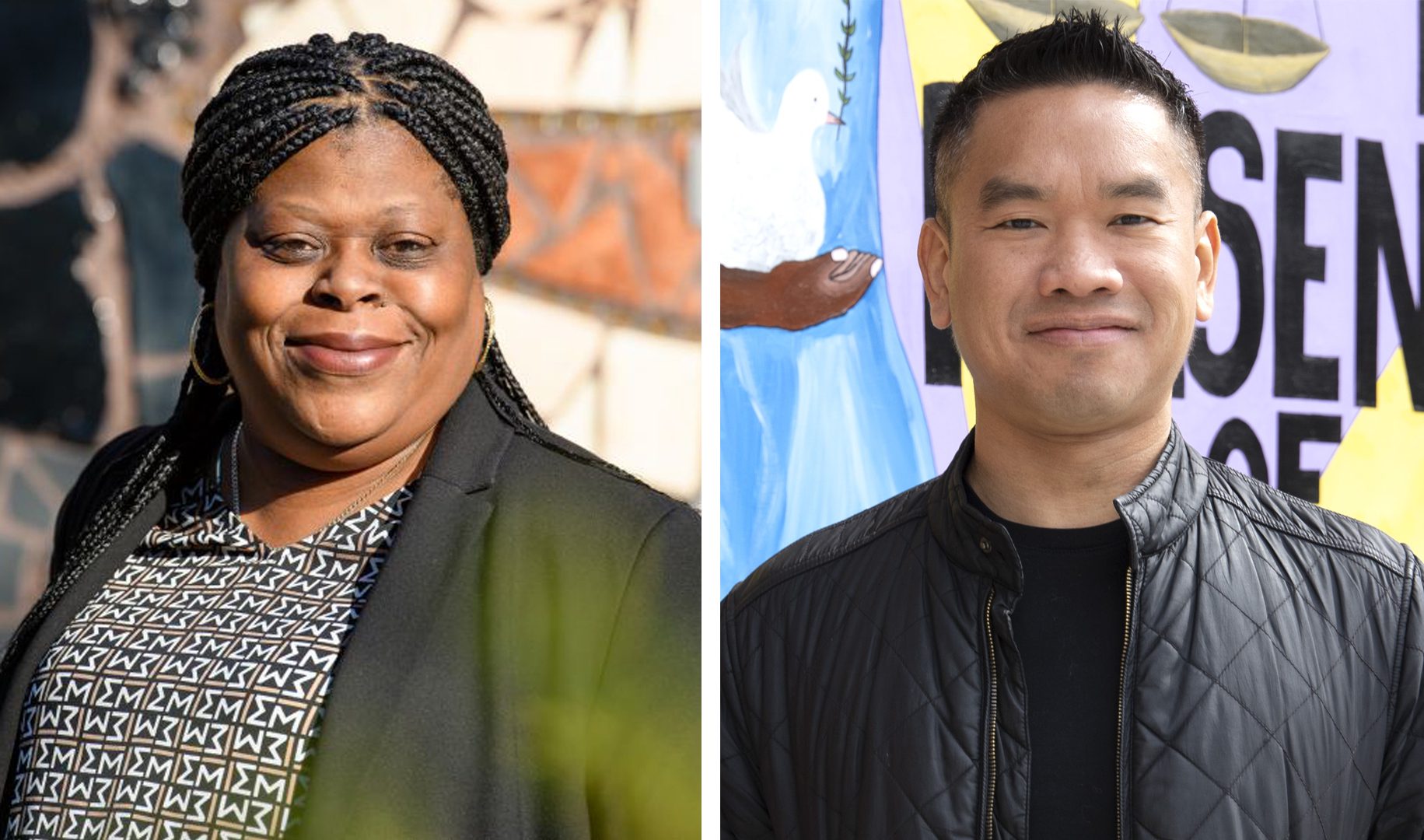
“This was really, really important to us that this be a civilian, should be a civilian, because we think in terms of community safety, oversight of the department should be the job, 100%, of a civilian,” said working group co-lead Eric Rosario at a press conference earlier this month. “Civilian oversight in this role is also going to be critical towards driving the kind of cultural change that you’ll need in a department like this and also the accountability as well and the integration of the work.”
As far as personnel, the Division of Police should initially consist of all existing staff of the current IPD, and the Division of Community Solutions should consist of unarmed civilian first responders.

As far as responsibilities, the Division of Police should “retain key law enforcement responsibilities,” per the report, and the Division of Community Solutions should “respond to quality of life and other incidents.” The report also further details a wide array of call types that would fall under each division or even under both.
“A property check is one of those call types that [right now], you would call the IPD and you would ask for one of the officers to go and check out your property if you’re on vacation or to check out a business to make sure the doors are locked,” said working group co-lead Karen Yearwood at the press conference. “Instead of having an armed officer go to such a call, why not have a community responder, which is our recommendation.”
The report also suggests that training for staff of the Division of Community Solutions should “emphasize a community-centered model which prioritizes community protection through de-escalation tactics, alternatives to use of force, trauma-informed approaches, mental health awareness, holistic responses, and data collection practices.”
“It is so important for us to seize this moment, to take advantage of this moment and to really dig deep and to reimagine, and that’s what this report is recommending,” said Laura Lewis, acting mayor of the city of Ithaca and working group member. “It is not recommending the status quo; it is recommending a re-envisioning of how we deliver public safety so that all members of our community will feel safe, will feel willing to reach out if they need response from the police, if they want a response from one of the unarmed units.”
As members of the working group can attest, turning months of deliberation into a concise report was no easy task.
“It was contentious,” said working group member and City Alderperson Ducson Nguyen. “It was respectful — conversations were generally very respectful — but there’s massive disagreements, and there’s a preference to get some kind of consensus. … But sometimes, that simply wasn’t possible. It just came down to up or down votes that ended up being sometimes very, very close. And so, the report truly reflects a lot of different perspectives.”
Nguyen added that the most contention arose around the call delineation portion of the report.
“A layperson would say, ‘Clearly [an] unarmed person should respond to this type of call,’ and then IPD would say, ‘Actually, those are the most dangerous calls we have. They have the highest potential for violence,’” he said. “The call delineation is one of the core products of the report and the most important thing that people shouldn’t gloss over because that’s really where the rubber hits the road.”
Specifically, the report calls for five unarmed responders as a starting staff, which Nguyen acknowledged “is insufficient” for handling the volume of calls they will be tasked with. But he said having five as a base “allows us to see how things work in the real world, tweak things as we go along and then continue to raise that number … depending on what the needs of the community are.”
Tompkins County
On the county side of things, the biggest development was the hiring of Monalita Smiley as the project director of the Community Justice Center, which is responsible for implementing the joint safety plans passed by the Ithaca Common Council and County Legislature (full release at tinyurl.com/ya8w4tjg).
Smiley started her role in January with over 20 years’ worth of public service experience under her belt. She recently served as the director of youth outreach at The Learning Web and still serves as a volunteer board member at several local nonprofits, such as Southside Community Center.
Smiley said that in the two months since her work began, her time has mostly been centered around the community healing recommendation of the Reimagining Public Safety Report.
“We’ve had a session, and we’re going into our second one this week, inviting community members to come in and talk about trauma and involvement in law enforcement,” she said last week. “And at the same time, simultaneously, we’re meeting with the Sheriff’s Department and the City of Ithaca Police Department to work on some community healing on the law enforcement aspect.”
At the Sheriff’s Department, County Sheriff Derek Osborne said he and his deputies have been “working hard” to develop the office’s new Professional Standards Unit and Sheriff Clerk program to “provide alternate response opportunities.”
“We received two new Sergeant positions for the Professional Standards Unit,” he said in an email. “One current Road Patrol Sergeant was transferred to this unit, and the second will be filled through the promotion of a Deputy Sheriff. … We received 87 Sheriff Clerk applications and are reviewing them now. Larry Workman and Deanna Carrithers have been working with us on this review.”
Osborne added that the Sheriff’s Office has identified a number of calls for the sheriff clerk to handle initially, with more responsibilities expected after they are “properly trained and gain the necessary experience.”
Osborne and Smiley both shared that it’s been a great experience working with each other and with other stakeholders throughout this process.
“Everyone that I have been introduced to coming into this position has been really so, so supportive and willing to meet and answer questions and really looking forward to working on the project with this Community Justice Center,” Smiley said. “So, that part’s pretty exciting, knowing that I have the support of so many different entities in this whole thing.”
Collaboration and community response
While there are set responsibilities on the county side and the city side, sources acknowledged that making progress on the public safety front requires collaboration between both. Smiley touched on how the city of Ithaca’s report fits in with the county’s goals.
“It’s a city-specific plan, but it does align with many of the other plans that are going to come out, and so, we’re going to work hand in hand with them, like [on] the alternative response plan, standardization of data and some training plans,” she said. “The goal is to have all the plans, between the city and the county, they’re going to align so they’ll feel in sync.”
As far as the overall response to the city’s report, results have been mixed to say the least. On the residential level, sources said that public feedback has been on a spectrum, with some saying the report goes too far and others saying it doesn’t go far enough. On the leadership level, some, like Lewis, support the report and the effects implementation could have.
“I think we will have [a] more inclusive, more comprehensive Department of Community Safety, and that will benefit all residents in the city of Ithaca,” she said. “We will be responding to calls more appropriately. So, I think the residents in the city of Ithaca will benefit significantly from this reimagining public safety.”
Others, like Osborne, weren’t as sure about the report or the results that could come from it. Osborne specifically highlighted the call delineation aspect, saying that “some of the call types under the community service solutions umbrella run the risk of being very volatile, and I fear someone is going to get hurt, not to mention the liability that could result.”
“The problem with trying to lump call types into specific groupings comes from the fact that calls seldom end up being the same thing as they first come in to dispatch as,” he said. “The most seemingly minor call could be completely different when the responder actually arrives on the scene. … With the two different organization types, a heavy burden is going to be placed at the dispatcher level, who will have to attempt to make the decision as to where the call goes. I can’t imagine [the Department of Emergency Response] wants that responsibility.”
Looking ahead
As past articles have covered, this is an ongoing, evolving process, and there’s still a long road ahead before the city or county will see full implementation of the goals outlined in the original report. Sources gave their thoughts on how the process looks through the rest of this year.
In regard to the city’s report, Nguyen said that implementing the suggested changes within the set timetable will be tough.
“We’re proposing a change to restructure city government as a new department, and that will require a change to the city charter, which requires a referendum,” he said. “To get a referendum on the ballot by November, we have to pass something, I believe, in July. … Because we meet once a month, we have from April to July to hammer something out. It will not be easy. And then, assuming that all goes well and passes referendum, then there’s a whole process of hiring a commissioner.”
On the county side, Smiley said the county is on track to meet its goals within a three-year timetable, and she’s “making sure all my I’s are dotted, my T’s are crossed, so that we can be successful in implementation of this.”
All sources encourage community members to visit the website publicsafetyreimagined.org and provide feedback on the city’s and county’s efforts, including the working group’s report. The website includes links to the initial plan published last spring as well as various resources to get involved in the process.
Jessica Wickham is the managing editor of Tompkins Weekly. Send story ideas to them at editorial@vizellamedia.com.
Related Articles
Holiday traditions bring community cheer
Tompkins County holiday traditions light up homes, farms, and schools with festive cheer and community spirit.
The gift of an experience: Local businesses offer hands-on holiday fun
Holiday experience gifts in Tompkins County include candle making, gourd crafts, and pottery workshops for creative seasonal fun.
Code Blue shelter opens amid praise, concerns and ongoing debate
Ithaca’s Code Blue shelter opens with larger space, showers, and case management to help residents during cold weather.