
Opinion: Zoning in Caroline — The good, the bad, the ugly
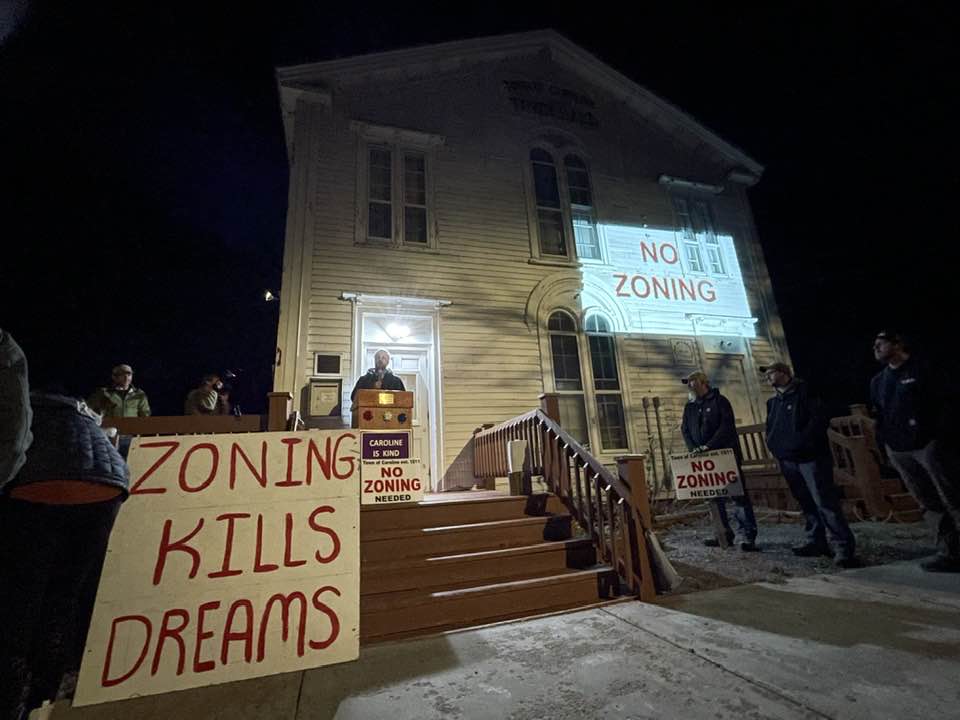
An update from the twilight zone that is currently the Town of Caroline…
It’s been a wild week as national press arrived in our tiny town and town leadership has not taken kindly to that — canceling a long-scheduled board meeting at the eleventh hour and largely avoiding opportunities to meet with experts whose message they did not want to hear.
On the bright side, much of the community enjoyed a lively and enlightening conversation with national author and planning scholar Nolan Gray about the nature of zoning and its impacts on communities across America, coming away with a greater understanding of the larger picture.
Indeed, there’s no getting around the fact that zoning has an embarrassing and inherent legacy of discrimination and NIMBYism that has played out along race and class lines since its inception in subtle and not so subtle ways.
Yet it’s fascinating that the Town seems content to sweep the historical, cultural and institutional aspects of zoning under the rug and look only to the environmental ones (for which the case is paper-thin). Zoning has contributed much to our dependency on cars and fossil fuels by arbitrarily blocking mixed uses. And it’s redlined communities in so many ways that are not easy to undo.
An argument often touted is simply that “zoning is everywhere so it should be here” — ignoring the fact that zoning is presently undergoing a national reckoning with a push to reform and repeal quickly gaining momentum in many states. Just as Caroline moves in the opposite direction, looking backward to a past we want to grow meaningfully away from.
It’s also been stated that zoning’s problematic track record somehow doesn’t apply to rural communities, a manufactured distinction that makes little sense if you follow it through. The issues are the same as zoning fractures communities along class and equity lines and their intersections. That’s already happened here in Caroline when a store that serves primarily those living in poverty was actively blocked with a years-long moratorium so that us “elites” would not have to look at an ugly yellow sign in our backyards.
Not-in-my-backyard is perhaps a natural human feeling; but it’s not one that should be legislated into reality.
The “comprehensive plan” for the town of Caroline states:
People of all identities — including, but not limited to race, gender, sexual orientation, age, religion, disability, national origin, or veteran status — are safe, welcome and valued. The supportive and neighborly ethos of a small rural community is extended to all residents, as the Town recognizes the value that diversity of all identities brings. The Town is actively engaged in antiracist initiatives and policy to guide Town decisions.
A noble statement.
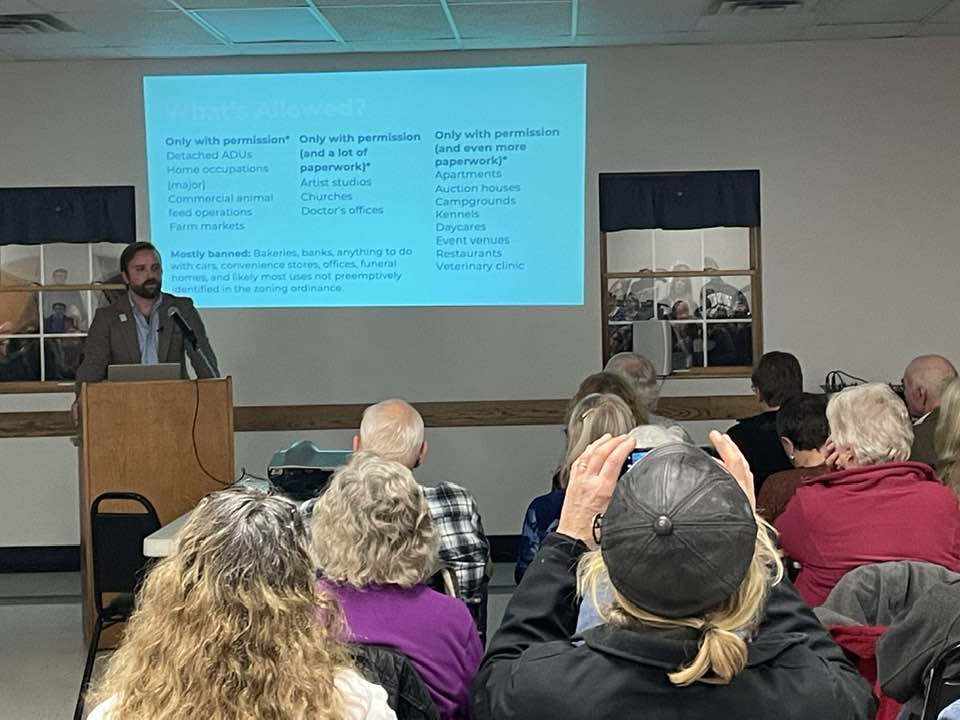
But if inclusion is so important to our community, this leaves us with one question. Why are so many of the people who should be concerned about the obscene underpinnings of zoning willing to look away?
In these fraught times, when we are polarized as a nation, a simple bipartisan message such as “No Zoning Needed” is unexpected and can be … confusing. (Suddenly right and left are holding hands?! Hell hath done froze over.) Even our political extremes have found common ground in this important, ethical cause.
Yet our board is deaf to that commonality. That, combined with major shortcomings in NY state law that allow neither a board recall nor a public referendum (other than an election or mock vote) have together created an ugly situation in our beautiful town, spinning up divisive vitriol about who is more neighborly, more kind and more sincere about the issues. It’s not pretty.
Of course, it’s become increasingly clear that none of this even matters because a complex web of federal and state grants to the county have been the quiet force actually driving zoning in Caroline. It’s possible to trace all this strife back to mandates from FEMA that require municipalities to implement flood laws and hazard mitigation plans in order to be eligible for disaster aid. These forces seem to have informed the overlays in Caroline’s zoning draft as well as the county hazard plan’s stated goal to fix the “problem” of Caroline being unzoned for the last 200 years.
Isn’t it high time to end this change-initiative gone wrong?
Zoning is scary; it shouldn’t be sugar-coated. It’s an American tragedy, responsible for the arbitrary lines that rule our lives. And like a cigarette habit, the best way to kick it is not to start.
So let’s make a motion to stop this nightmare and restore happiness and healing to our little town.
Related Articles

Why accessibility is not an option, but a responsibility
TCAT accessibility in Ithaca leaves disabled residents struggling. Community advocacy is essential to improve public transit for all.
World peace – one person at a time
Ithaca peace activism supports nonviolent solutions, nuclear disarmament, and global awareness through weekly corner gatherings.

Signs of Sustainability: Growing trust and resilience in Danby
Danby community resilience grows as neighbors build relationships, share resources, and create supportive local networks.